

Guest Blog Post
Dartmouth is the kind of place where people notice things they didn’t plan to notice. A sudden movement along the waterline. A sound overhead that makes you stop mid-step. Often, it’s birds that pull your attention first — not dramatically, not all at once, but gradually. And once you’ve started looking, it’s hard to stop.
For travellers already interested in birdlife — or those beginning to realise they might be — places like Dartmouth tend to linger in the memory. It’s the same quiet curiosity that later leads some people towards wider birding journeys across the UK and beyond, often through specialist operators such as Wildfoot Travel, who focus on birdwatching experiences shaped by landscape rather than landmarks. Dartmouth doesn’t try to compete with that bigger picture. Instead, it offers something simpler. A place where the habit of watching can begin, or deepen, without effort.
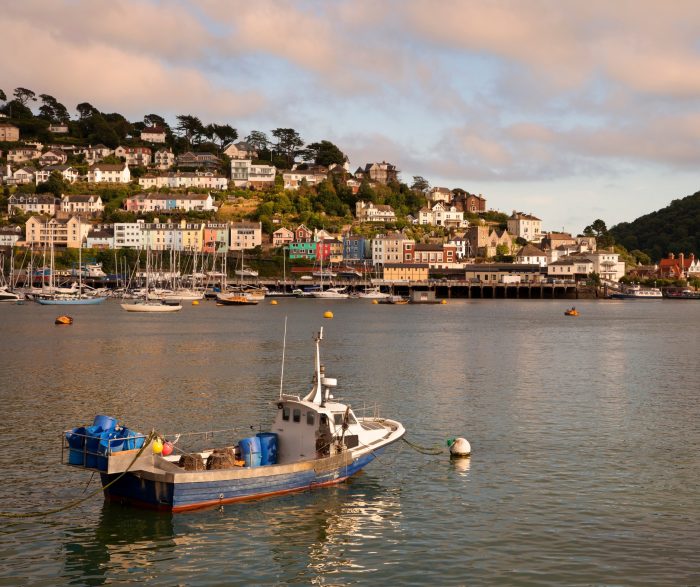
At the centre of it all is the River Dart.
The river doesn’t dominate the town, exactly. It moves alongside it. Sometimes calm, sometimes restless, always shaping the edges of daily life. For birds, that steady movement creates opportunity. For people, it creates rhythm.
The River Dart, moving at its own pace
The Dart is tidal for much of its length, and that matters more than it first appears. As the water rises and falls, the river reveals and conceals feeding areas throughout the day. Mudflats appear, then vanish again. Shallow edges shift constantly. Birds respond to this in real time, arriving and dispersing according to the tide rather than any predictable schedule.
If you spend even a short while along the waterfront, you’ll start to notice patterns. Waders working the edges with quiet determination. Gulls drifting rather than circling. Cormorants pausing — seemingly unimpressed by human activity — wings spread, drying, waiting. None of it feels staged. That’s part of the appeal.
What’s perhaps most striking is how accessible all this is. You don’t need to leave the town to experience it. A bench by the river, a slow walk along the harbour, a few minutes leaning on a railing — often that’s enough. Dartmouth doesn’t ask for commitment. It rewards attention.
Where woodland meets water
Step slightly away from the centre and the landscape begins to layer itself. Woodland slopes lean down towards the river, creating sheltered margins where birds seem to slip between worlds. These edge spaces — not quite river, not quite forest — are often where the most interesting moments happen.
Here, birdwatching becomes less about spotting and more about noticing. A flicker of movement in the undergrowth. A call you half-recognise but can’t quite place. Songbirds are common, especially as spring settles in, but there’s always the sense that something else might appear if you wait a little longer.
It’s not dramatic birding. And perhaps that’s the point. The Dart encourages patience without insisting on it. You can engage deeply, or casually, or somewhere in between. All of it feels valid.
Following the river outwards
As the river widens and begins to loosen its grip on the land, the character of birdlife shifts again. Harbour edges give way to open stretches of water, and eventually to the coast beyond. The transition is subtle. You might not notice it happening, only that the birds around you have changed.
Coastal paths near Dartmouth offer elevated views where seabirds come into play — fulmars riding the air, gulls moving with purpose rather than noise, the occasional gannet offshore if conditions are right. Migration seasons bring unpredictability, which adds a quiet tension to watching. You don’t know what you’ll see. You just know it’s worth looking.
There’s something satisfying about this continuity — river to estuary to open sea — all connected, all visible within a relatively small area. Birdwatching here feels less like visiting separate sites and more like tracing a single, unfolding landscape.
Seasons make themselves known
Dartmouth changes with the year, and birdlife makes those changes visible. Winter strips things back. Trees thin out, sightlines open, and birds gather where the river offers shelter. There’s a clarity to the colder months that suits watching — fewer distractions, sharper contrasts.
Spring and summer feel different. Louder, perhaps. Busier. There’s more movement, more sound, and longer days to linger. Breeding activity brings urgency, and the landscape feels temporarily crowded with life.
Returning at different times of year reveals how much the experience depends on timing. The same walk can feel entirely new, shaped by weather, light, and migration rather than by any human intervention.
Birdwatching without performance
One of Dartmouth’s quiet strengths is that birdwatching here doesn’t feel like a performance. There’s no sense of doing it “properly” or incorrectly. You don’t need lists or targets. You don’t even need to identify everything you see.
For many people, that informality is what makes the experience stick. You might come for a walk, a coffee, a view — and leave having spent ten minutes watching a single bird without quite realising how long you stood there.
Over time, moments like that accumulate. They change how people move through landscapes. They make you look up more often. Look longer. It’s often from these unstructured beginnings that a deeper interest grows, eventually leading people to seek out birdwatching experiences elsewhere, guided by the same principles of patience and place.
From Dartmouth to elsewhere — without losing the thread
Dartmouth doesn’t try to be a destination for everyone. And it doesn’t need to be. What it offers is something quieter: a way of seeing.
For those who go on to explore birding more widely — across the UK or further afield — the habits formed along the River Dart tend to travel with them. Attention to tide and season. Respect for habitat. An understanding that wildlife sets the pace.
Specialist birdwatching journeys, including those offered by Wildfoot Travel, build on that same mindset, just on a broader scale. But the starting point often looks remarkably similar: standing near water, waiting, watching, and learning to be still.
Why the River Dart stays with you
Some places impress immediately. Others work more slowly. The River Dart belongs to the second group.
What stays isn’t usually a single sighting or moment of excitement. It’s the accumulation of small observations. The way birds move in relation to the tide. The feeling that the landscape is quietly busy, even when it appears calm. The sense that nothing is being put on for show.
For birdwatchers — whether experienced or just beginning — that balance is rare. Dartmouth doesn’t overwhelm. It invites. And once you’ve accepted that invitation, it’s difficult not to carry it with you, long after you’ve left the river behind.
” Sponsoresd”